In every design situation, even when taking into account all restrictions and limitations, there are still an unlimited number of possible visions and operating images. A design situation can never be restricted tot he extent that there is only one solution, because if that were the case, it is, by definition, not a design situation.
Löwgren, J. & Stolterman, E. (2007). Thoughtful Interaction Design. The Process
One question that sums up what I take away from this first lesson concerns the scope of a design process. While many roles in society play in a specified arena, be it the political, medial, or other, it could be argued that interaction design necessarily has to traverse multiple ones. By looking at the complex functions behind what constitutes an interface, we can potentially find answers in the languages of all the arenas at play in the situation.
It is important to consider the environment, the scale and the format one is working with. Depending on these an intervention could look very different, taking form as a structural change, an artistic component, a speaking toaster. Though possibly the key to a structural change would be to have the toaster spew ideological content.
Concerning art and design, fundamentally I see the artistic as almost a subset of the design method, though the artistic endeavour specifies a rejection of boundaries and parameters, acting more as a proposal or statement, exemplified in the narratives and guides science fiction presents.
When approaching a design situation whether concerning an interaction between people, between people and objects, or even between different objects we are confronted with a general choice; do we design the interaction, or merely observe it and facilitate it. We can either make users think the way we want them to or enable people to create their own use of a product. This continues into how a product is marketed, as generally the marketing will imply a certain lifestyle or context of its own. This continues throughout the life cycle of a project. If, for instance, we launch a social media site with an express purpose, e.g. keeping up with friends, and the platform is “misused” to organise political resistance, is this something we integrate or resist as it goes against the design vision.
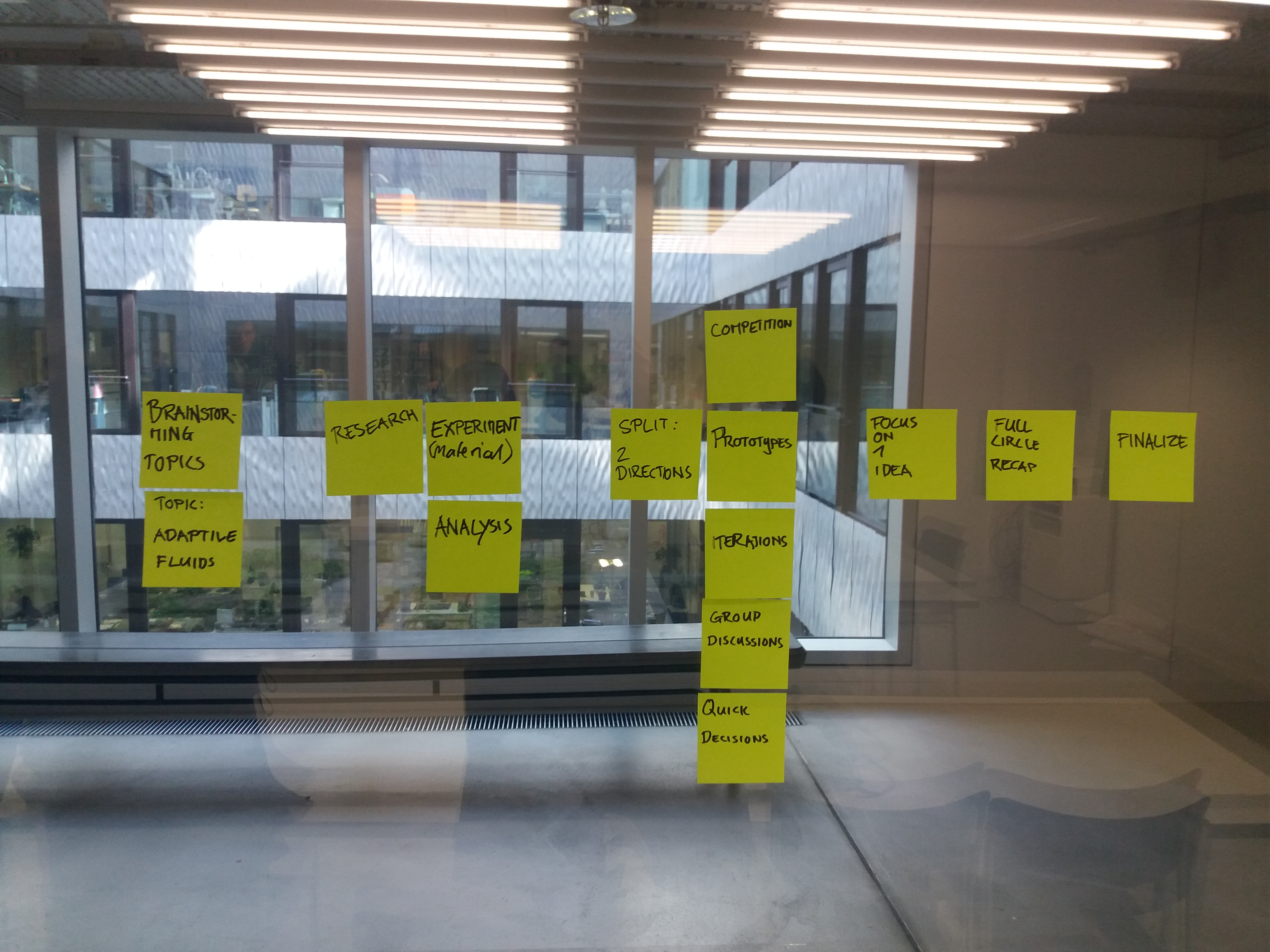
Looking at the process of a specific project, our contribution to the course “Digital Fabrication” earlier this year we see an interplay of defining the topic and potential solutions.

 Interaction Design Methods